
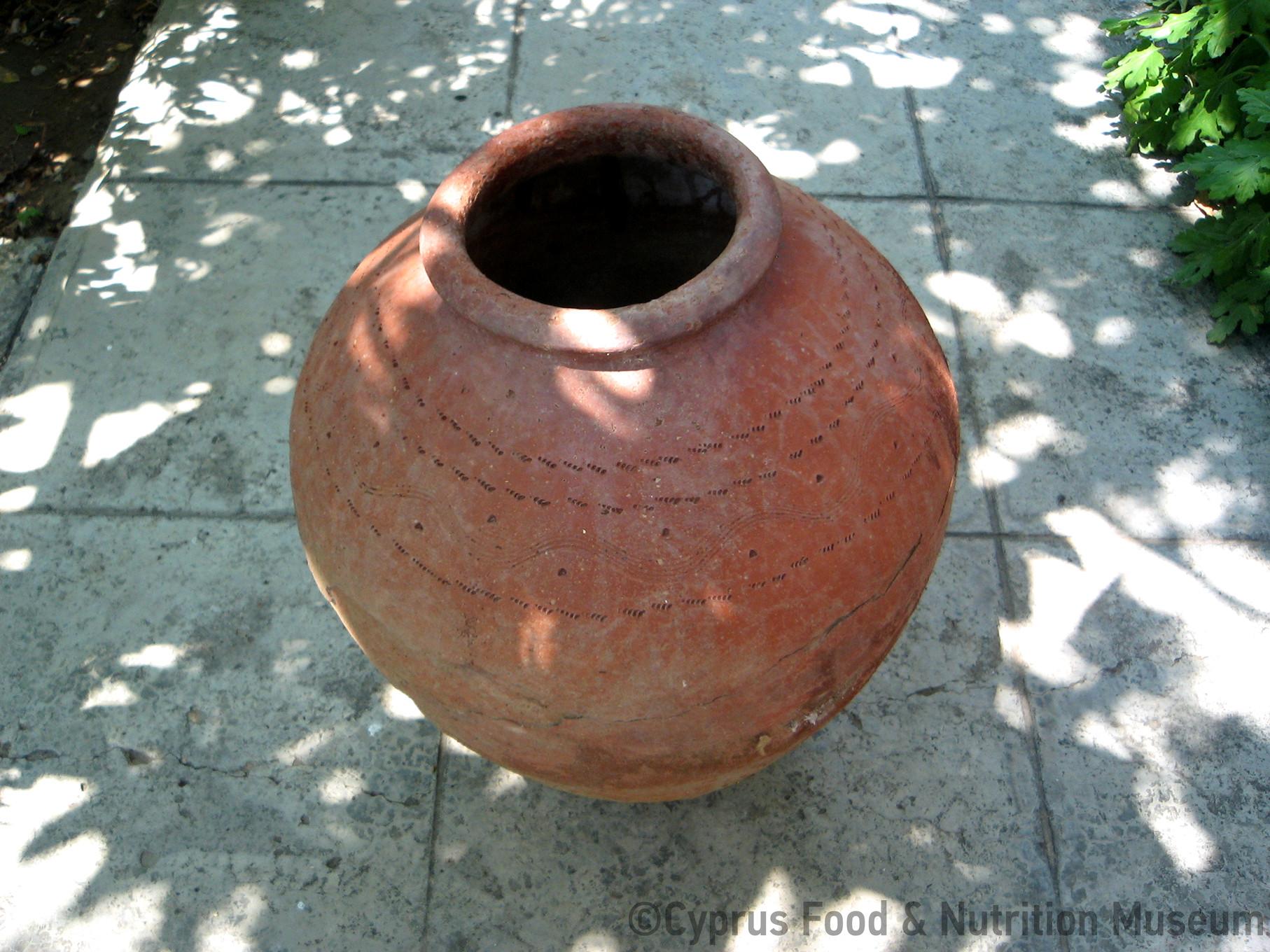
Koumni, a storage vessel used for cured meats.
Source: Stalo Lazarou
The name “koumniasta” comes from the clay vessel in which pieces of meat preserved in fat were stored. It refers to the “koumna” or “koumni,” a type of small clay jar.
Name - Recipe
Cooked pork meat preserved in pork fat.
The name “koumniasta” comes from the vessel (koumnin) in which they were stored.
In Western Cyprus, in the districts of Paphos and Limassol, this type of cured meat was called “koumniasta,” while in Eastern Cyprus, in the districts of Famagusta and Kyrenia, it was known as “pasta.”
Pork meat
Pork fat
Cumin
Pepper
Dried coriander
Salt
Koumniasta are cooked pieces of pork (lean meat), roughly the size of a large egg, which are preserved for long periods in pork fat — or, as it was called in the past, the “milla of the pig,” the fat collected during the roasting of tsitsirides. Titsiries are small pieces of pork fat, the remains of melting pork fat in the pan.
To prepare the meat, we use the part from which pork chops are cut and remove the bones.
We cute the lean meat into strips and salt it.
The meat is left for 2 to 3 hours so the moisture can be drawn out, and then we sprinkled it with pepper, cumin, and dried coriander.
(Sofokleous 2004, 164)
Functional and symbolic role
The meat was stored in the koumna (a clay vessel similar to a small pithos) and covered it with pork fat (milla) so it would keep for a long period of time.
They used koumniasta either by frying them again or by cooking them in the same way as potatoes. (Xioutas 1978).
Additional information and bibliography
Ξιούτας, Π. (1978). Κυπριακή λαογραφία των ζώων (Δημοσιεύματα του Κέντρου Επιστημονικών Ερευνώνν XXXVIII), Κέντρο Επιστημονικών Ερευνών Κύπρου, Λευκωσία.
Σοφοκλέους, Γ. (2004). Παράθυρο στη Κύπρο μας. Λαογραφική –Πολιτιστική Ανθολογία, τομ. Β΄, Λευκωσία.
Stalo Lazarou, Demetra, Demetriou, Antonia Matala

Foods
Afelia
Pieces of pork, fried and cooked in wine and coriander, often served with pilaf bulgur with yoghurt.

Traditional Recipes
Afelia
Afelia is a typical Cypriot pork dish with wine and coriander. They are often served with potatoes or pilaf bulgur with yoghurt.


Traditional Recipes
Kokkaloú cured pork ribs
The method of preparation of kokkalou is reminiscent of lountza. Cured kokkalou is cut into pieces and either barbecued or fried.

Traditional Recipes
Laopittes
"We used to make laopittes when we had a surplus of pork fat and especially during Christmas when the whole family would gather." (Marina Kattou, Vouni Limassol)

Foods
Loukaniko - Cyprus sausage
Pork sausages produced from coarsely minced pork, soaked red wine, to which various spices are added and smoked.

Foods
Loukaniko Pitsilias
Pitsilia sausages are produced in the communities of the Pitsilia area, from coarsely minced pork which is 'cooked' (matured) in local dry red wine, to which various spices are added. It is, then,…


Foods
Paphitiko loukaniko - Paphos sausage
Paphitiko loukaniko is prepared in Paphos district from minced pork meat that is cured in local red dry wine and dried in the sun.

Traditional Recipes
Pastosyka - dried figs
In the past, dry white figs were called pastosyka, and dry dark coloured were called maxilles. Maxilles are produced in Paphos. The sweetest and tastiest are those of Lysos and Arodes (villages of…

Traditional Recipes
Pork chops in wine
The chops are marinated overnight in wine and coriander. The marinade ingredients are later used during cooking, forming a delicious sauce.

Foods
Preparation of traditional charcuterie
The main types of traditional Cypriot charcuterie are loukanika (sausages), lountza, hiromeri, zalatina, posyrti (bacon), tsamarella and apohti.


Foods
S̆iros, shiros
Every part of the animal, even the theoretically useless parts, such as the ears, the intestines and the feet were important and useful.

Traditional Recipes
Titsiri(d)es
“Cut the fat of the pig into small pieces. Fry them until they are well cooked” (Panayiota Mikkeli, Kyperounda, Limassol).

Traditional Recipes
Titsirópittes
These are pittes (bread) with titsirides, i.e. fried pieces of pork fat.


Traditional Recipes
Yahni beans in a clay pot
"...we put them in a clay pot. Add the sliced onion, the chopped celery, the tomato juice, olive oil, salt and pepper and water to cover them." (Elisavet Panagiotou, Kornos)